Why is filament 1.75 mm, and how important is the tolerance?
6 September 2026 · AronWhy is filament 1.75 mm, and how important is the tolerance?
Most modern FDM printers use 1.75 mm filament. A strikingly precise dimension, where consistency can matter more than you might think.
1.75 mm as the standard
The two most common standards are 1.75 and 2.85 mm, with 1.75 mm dominating among FDM printers today.
The smaller diameter makes the filament more flexible and easier to feed through the printer. It also takes less force to push through the hotend, while each millimeter of filament contains less plastic and therefore gives finer control over the amount of material.
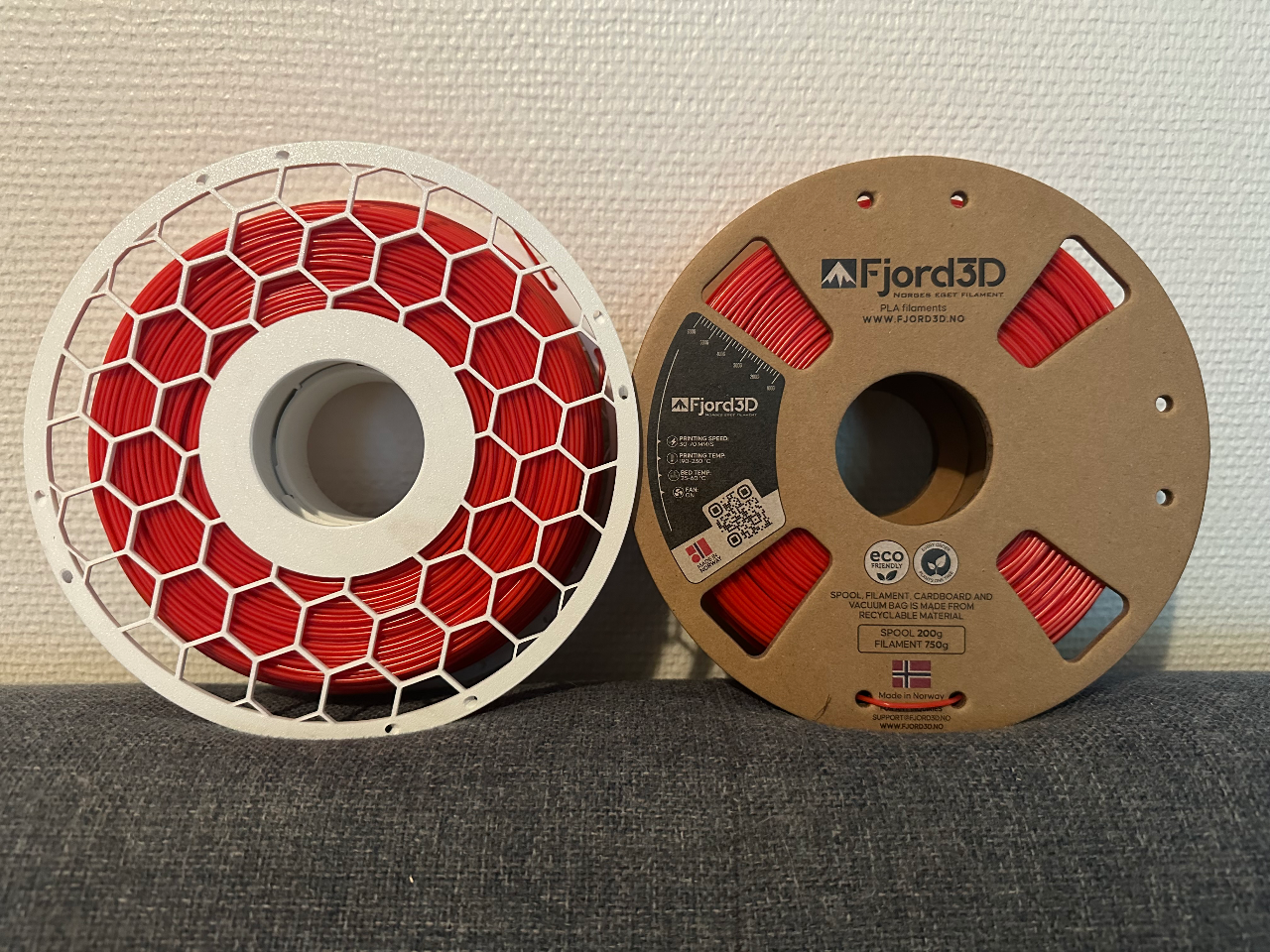
At Fjord3D we can produce both sizes, and other diameters as well if a customer needs a custom format.
Small differences matter a lot
The printer feeds in a set length of filament and assumes the diameter stays consistent.
The amount of plastic is determined by the cross-sectional area. That is why 1.70 mm filament contains about 5.6% less material per millimeter than 1.75 mm, while 1.80 mm contains about 5.8% more.
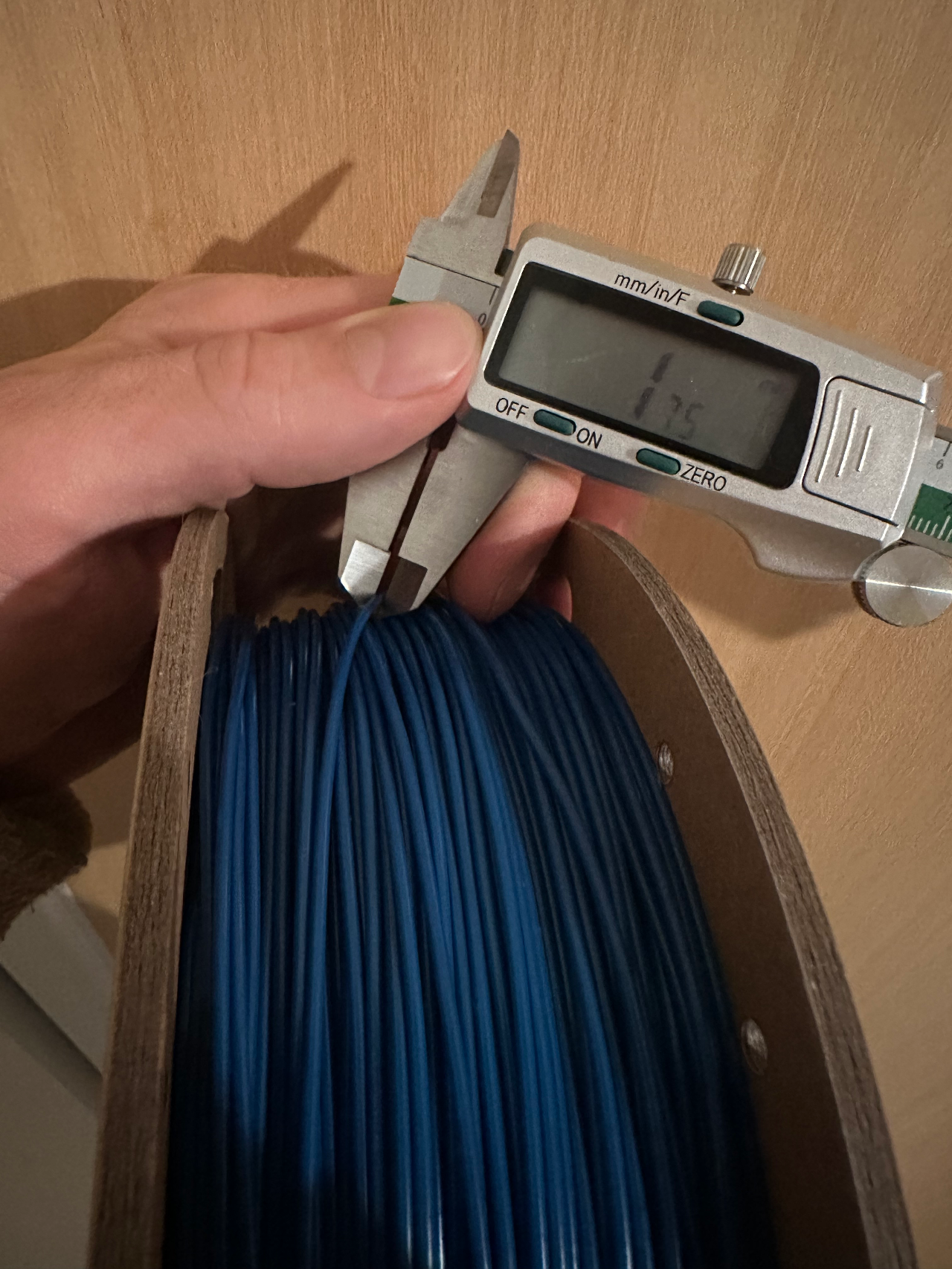
Filament that is too thin can cause under-extrusion, while filament that is too thick can cause over-extrusion and, with larger deviations, feeding problems as well.
What matters, then, is not only hitting 1.75 mm, but keeping the filament consistent throughout the entire spool.
How diameter is controlled in production
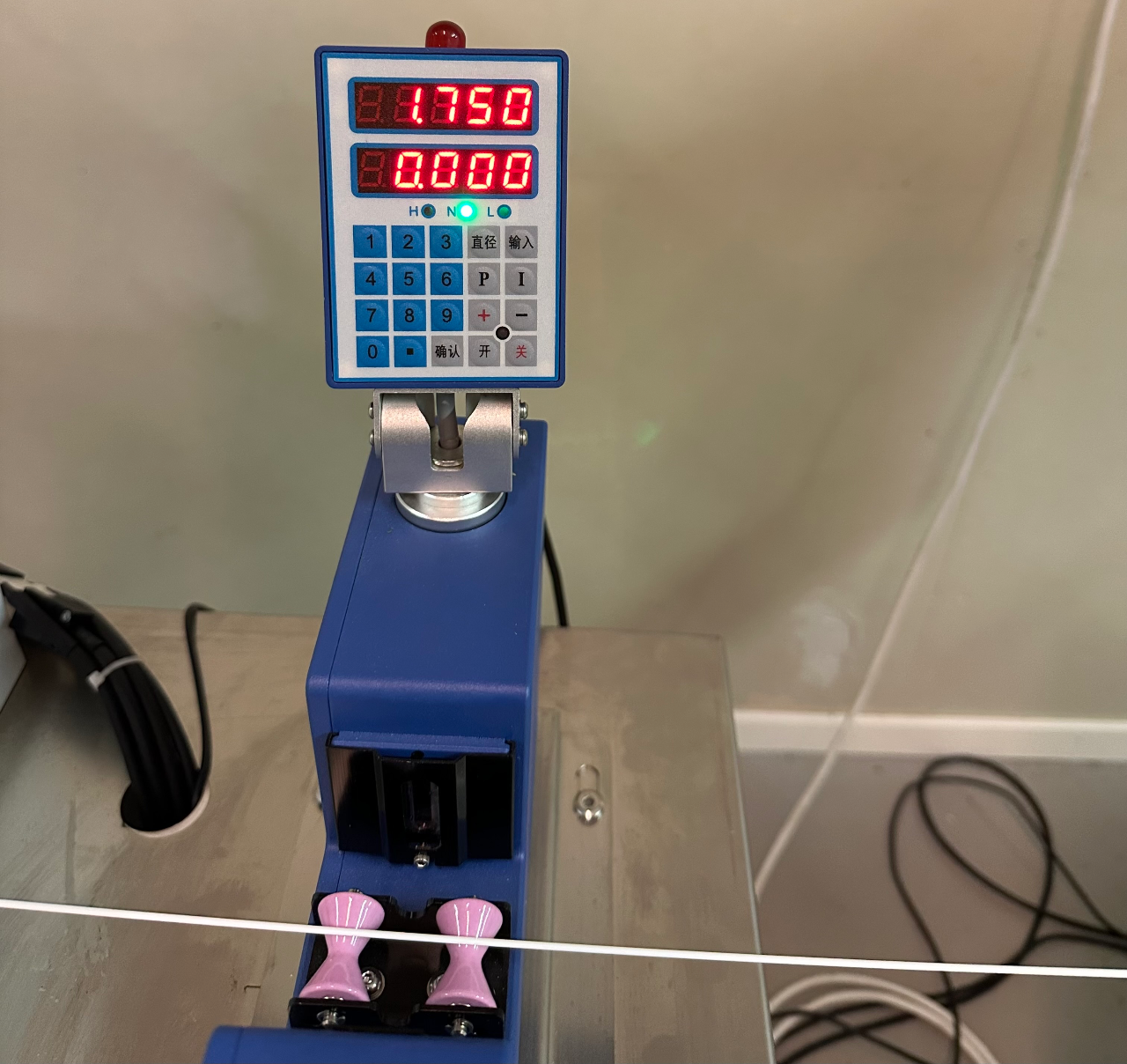
On our extruder line, the diameter is mainly determined by the interplay between how much material the production extruder's screw pushes out and how fast the puller draws the filament on through the line.
More material relative to the pull speed gives thicker filament. Higher pull speed relative to the amount of material gives thinner filament.
Different polymers and blends must also be run at different speeds because they behave differently during extrusion. Stable PLA, for example, can be produced considerably faster than certain carbon-fiber-reinforced nylon materials.
It is this interplay between material, extrusion and pull speed that we adjust to keep the filament consistent.
Consistency is more than diameter
Good filament should not only have the right diameter. It should also be consistent in roundness, material properties and color.
Ovality, meaning how much the filament deviates from a perfectly round shape, is also important. A filament can have the correct average diameter and still vary in shape from one measurement direction to another.
The raw materials, the blend and how the material is processed affect how the filament behaves in the printer and in the finished part. At the same time we want the pigmentation to be stable, both in actual color and in opacity.
We are therefore continuing to develop our measurement and scanning systems. The plan is that each individual spool will eventually be linked to its own production data, so the customer can see relevant measurement parameters, variations and graphs for the exact filament they have purchased.
Good filament is first and foremost about consistency: in diameter, roundness, properties and color, meter after meter.