AB 2047: California's 3D printer law also concerns Norway
31 August 2026 · AronCalifornia wants to regulate 3D printers. That is why it also concerns Norway
We produce filament in Norway, not weapons. Still, we believe what is happening in California concerns us, and perhaps you as well.
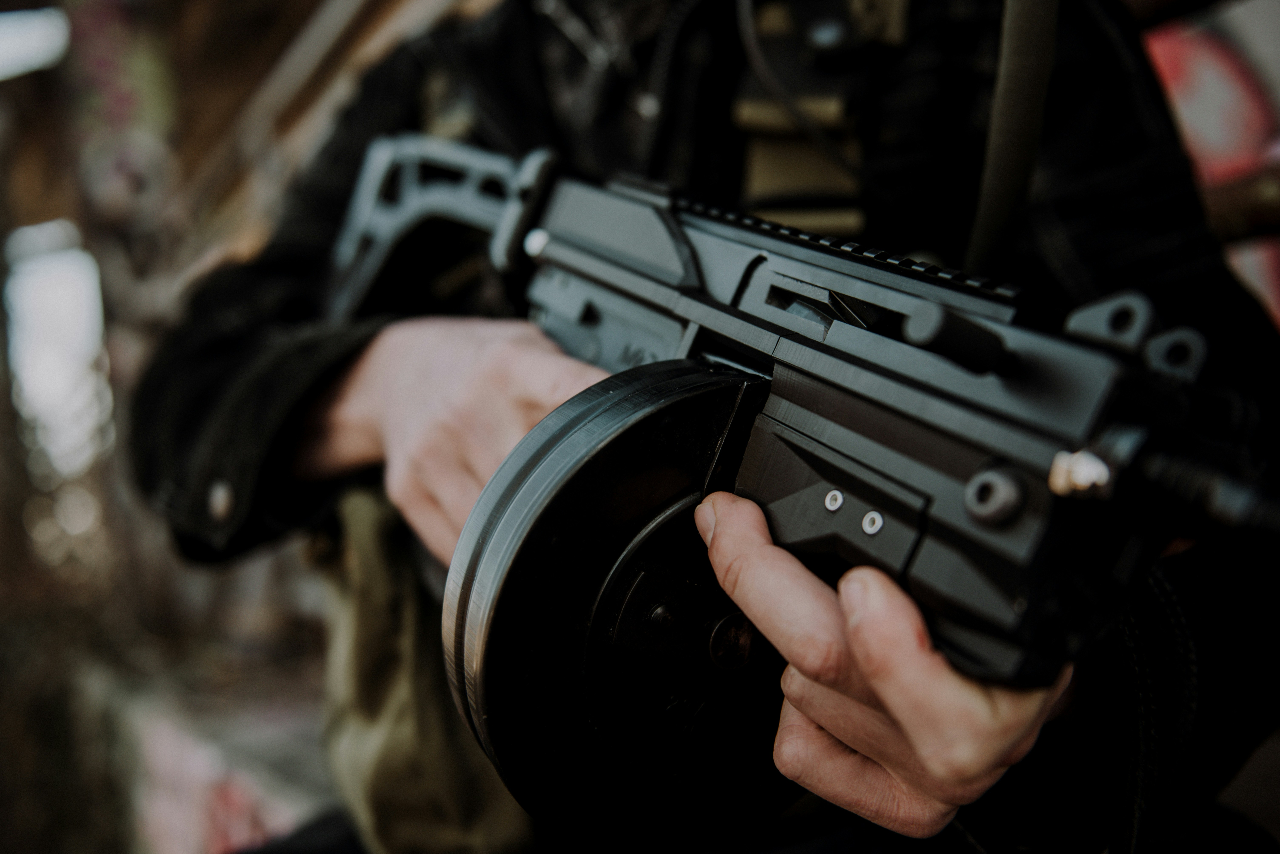
The reason is actually simple. Formally, the proposal is about 3D printed weapons, but the solution under discussion is much broader. It is about how much control should be built into the 3D printer itself.
It may seem controversial that we at Fjord3D oppose this kind of regulation. As if we were against gun control.
That is not the point.
Illegal weapons production can and should be regulated. But does that mean the solution must be that the tool itself controls what the user is allowed to make?
We think this is an important distinction.
When the tool itself becomes the controller
California is now considering bill AB 2047. It opens the door for 3D printers in the future to have to include technology that evaluates a file before printing and blocks the job if the system decides it will produce a firearm or a part designed to convert a semi-automatic weapon to fully automatic function.
The proposal was scaled back in August, and the requirements do not take effect immediately. By 1 July 2027 at the latest, California's Department of Justice is to check every quarter whether ASTM International has published an industry standard for such blocking technology.
If such a standard is published, and the authorities assess that it shows the technology is actually feasible, California must within 24 months draw up concrete rules and minimum requirements.
But the basic principle remains:
The printer must then be able to refuse to print your file.
A 3D printer is an ordinary production tool. It is used for prototypes, spare parts, education, research, art, assistive devices and manufacturing.
Asking it to control the content is a bit like asking a pen to refuse to write a sentence the authorities do not want you to write.
The law no longer regulates only the act. Control is moved into the tool itself, and that is the development we are reacting to.
Producing firearms with a 3D printer without the necessary permit is already illegal in California. In Norway, private manufacture of licensable firearms and firearm parts also requires a permit.
A printer does not really know what it is making
On a typical FDM printer, the print job becomes machine instructions, often G-code: movements, extrusion, temperatures, speeds and other commands.
Software can reconstruct the geometry and try to analyze it. But that does not mean the machine understands what the object is or what it will be used for.
A database can recognize known models, but 3D models are easy to change. Small geometric changes can make a direct comparison no longer work.
If the system instead tries to recognize every possible variant, the risk increases that completely legal parts will be blocked. In our view, this is a large part of the problem. Incorrectly blocked print jobs can hinder development and innovation, and in the worst case create problems in situations where time is actually critical.
The problem is therefore quite fundamental:
A filter that is easy to bypass has little effect. A filter that is hard to bypass requires ever more control over the printer and the user.
What happens to open source?
This may be the part of the problem we find most concerning.
3D printing has developed incredibly fast precisely because the technology has been open. Users have been able to change firmware, build their own printers, use alternative slicers, repair their machines and experiment with new solutions.
Much of what we take for granted in desktop 3D printing today comes from the open source community.
But a mandatory control system only works if the user cannot easily turn it off. If the manufacturer is to guarantee that every print job goes through the check, the system must also be designed to stop the owner from bypassing it.
Then it suddenly becomes about more than which files are allowed. It becomes about software, slicers, updates, modifications and how much control you should have over a machine you own yourself.
Then it is natural to ask: How easy should it be to install your own firmware? Can you use a different slicer? Can you build your own machine? Who decides which updates the printer must accept?
Once such control mechanisms are built in, the debate is no longer only about one category of illegal files.
It is about who actually has control over the machine you have bought.
Small manufacturers may be hit hardest
Large international manufacturers can spend a lot of money on software, testing, lawyers and documentation. A small manufacturer with five or ten employees does not have the same resources.
If a large share of the market requires such systems, small manufacturers may end up withdrawing from the market entirely. For them, the cost of meeting the requirements may simply become too high.
That can lead to less competition and a market dominated by a few large manufacturers. At the same time, it can become harder for new technology companies to challenge the established players.
Why does this concern Norway?
California is an enormous market.
If a manufacturer has to build this kind of control into its printers in order to sell them there, it is not certain they will make a separate and freer machine for Norway. It may be far cheaper to use the same platform worldwide.
California is also such a large and important market that decisions there can quickly influence other states, and potentially other countries as well.
Rules from California can therefore end up in printers sold in Norway, even if Norwegian authorities have never adopted equivalent rules.
And once the infrastructure exists in the machine, it is natural to ask what it can be used for later.
Today the discussion is about illegal weapons. In the future, the same technology could in principle be used on other regulated products, spare parts, medical equipment or designs claimed to infringe intellectual property rights.
That does not mean this will necessarily happen.
But it is much easier to expand a control system that already exists than to introduce an entirely new one.
That is why we believe the discussion should be had now.
Fjord3D takes a stand
It is easy enough to understand that large companies are cautious about speaking out on such political questions. They operate in many markets and have a lot to lose from being seen as political.
At the same time, we think it is a shame if the industry stays silent when regulation directly affects the technology we work with.
That is why we greatly appreciate people like David Tobin, who has testified against the proposal in California, and Marleen Vogelaar, CEO of Shapeways, who has also been clear about the technical and industrial problems.
Fjord3D is a smaller company, but we still believe it is important to show where we stand.
We are against mandatory content control in ordinary 3D printers.
Not because illegal weapons production should be accepted.
But because we believe the law should regulate the illegal act, not turn millions of legal production tools into automatic controllers.
3D printing has become so useful because the technology is flexible, open and accessible.
We think that is worth protecting.
Want to speak up?
If you share our concerns, you can contact relevant elected officials in California and say what you think about AB 2047.
We believe politicians should hear more about the consequences for freedom, open source, research, innovation and small manufacturers, and about how expensive such a control system can become to develop and enforce for the state.
California's own analysis of an earlier version described the costs as very significant and hard to quantify. That comes on top of possible losses if research, development and competition are hindered.